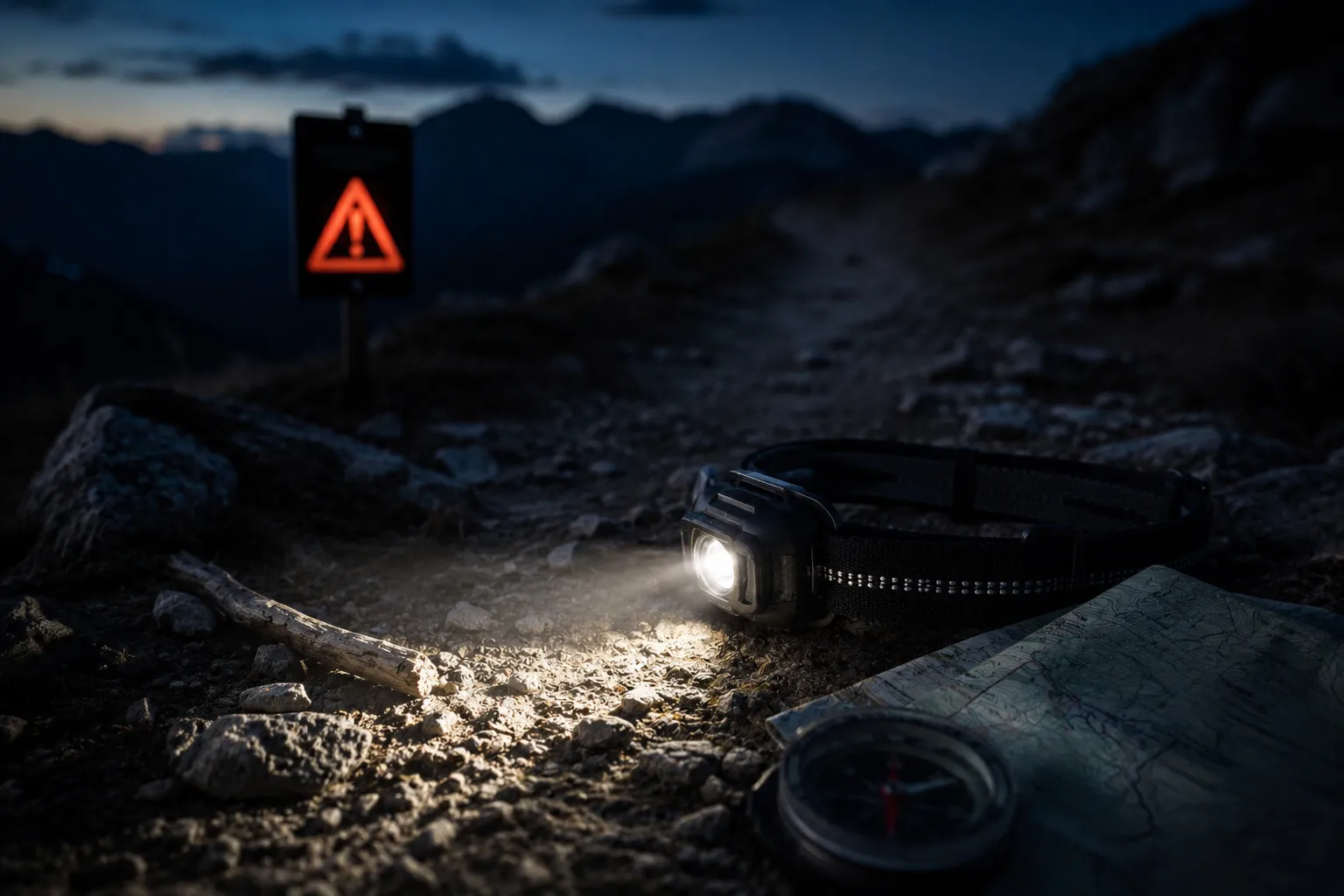
Walking at night in the mountains is magical: the silence, the stars, summit sunrises. But darkness multiplies the risks, and almost every scare comes from the same mistakes. Here are the most common ones and how to avoid them, so your night outing is safe and enjoyable.
1. Trusting just any headlamp
This is the mistake. At night, your headlamp is your only connection to the terrain. The typical failings:
- Dead batteries with no spare.
- Too few real lumens or a poorly spread beam.
- Not knowing how to use the modes (high to see far, low so you don’t dazzle people when walking in a group).
Before heading out, read up on the best headlamp for night hiking and always carry spare batteries or an extra power bank. A small backup headlamp weighs nothing and gets you out of trouble.
2. Dressing for the daytime temperature
At night the temperature plummets, and if you stop to rest or wait for sunrise on a summit, the cold really bites. The mistake is going out in your midday clothes. The solution is the three-layer system: add a mid layer and a windbreaker even if they feel like too much at the start, because you’ll be grateful for them when you stop.
3. Going too fast
At night your field of vision shrinks to whatever the headlamp lights up. Keeping your daytime pace is asking for a trip or a misstep. Shorten your stride, watch where you put your feet and give yourself extra time: a night route always takes longer than by day.
4. Neglecting navigation
Without distant visual references, it’s incredibly easy to drift off course. Common errors:
- Relying entirely on your phone (which dies in the cold and runs out of battery).
- Not having studied the route in daylight.
- Not telling anyone your plan.
Take the track downloaded offline, a backup map and let someone know your route and expected return time.
5. Going alone the first time
Night amplifies any problem: a twisted ankle by day is an annoyance; at night and alone, it’s an emergency. To start out, go with company and pick an itinerary you know from daytime.
6. Not thinking about the overnight
If the night outing drags on or you decide to stay and watch the sunrise from up high, it helps to know how to improvise a safe wait. Here it pays to have some idea of how to plan a bivouac: even if you don’t sleep, knowing how to shelter from the wind and conserve heat makes all the difference.
In summary
A good headlamp with a spare, layered clothing, a sensible pace, prepared navigation and company. With those five points covered, night hiking stops being intimidating and becomes one of the best ways to experience the mountains.