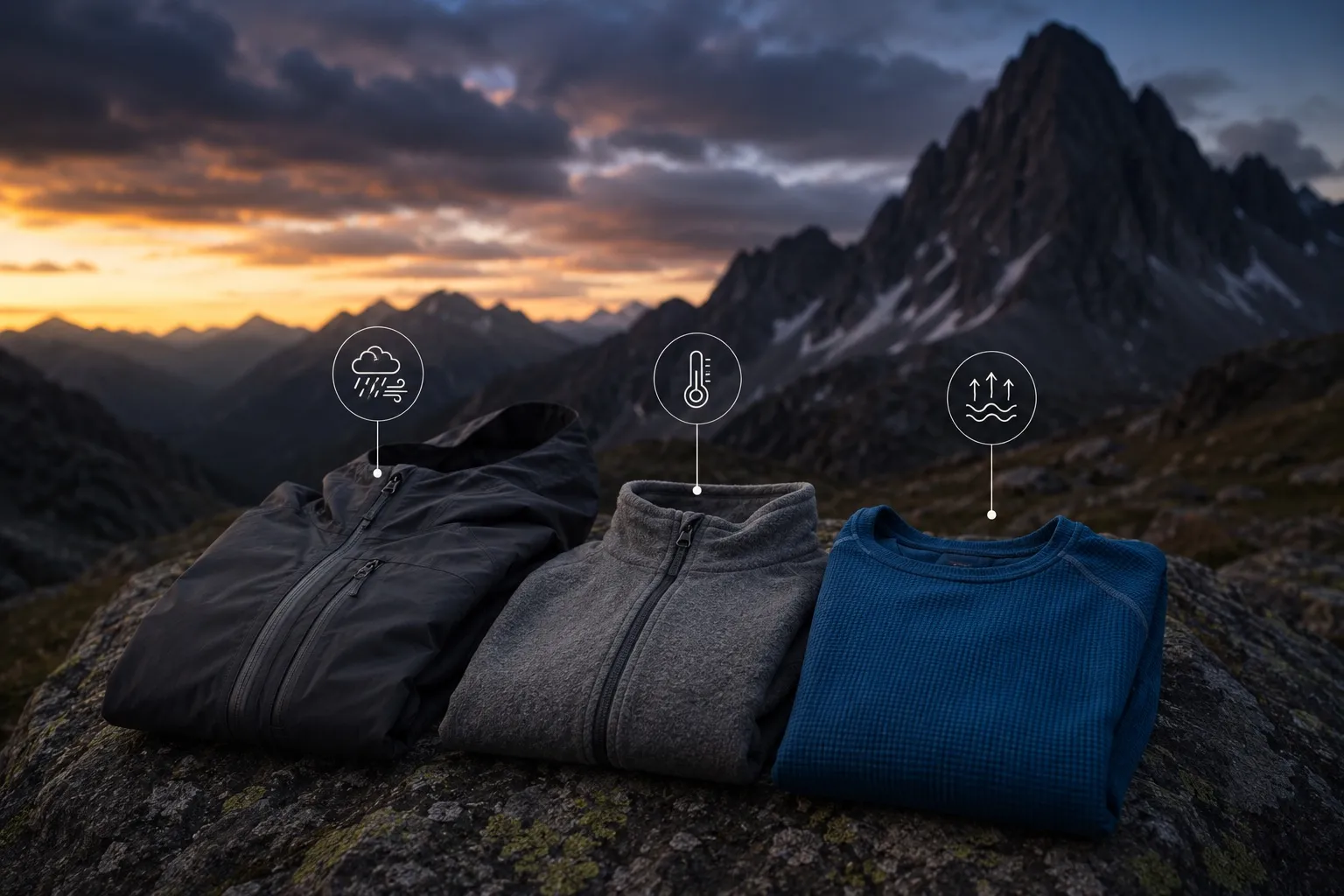
Dressing well in the mountains isn’t about wearing lots of clothes, but the right ones and knowing how to manage them. The three-layer system is the time-tested method because it works: it lets you regulate temperature and moisture as you climb, stop, or when the weather changes. Master it and you’ll carry less and be more comfortable on any outing, from a day route to a bivouac.
The principle: managing sweat
The mountains don’t chill you so much through the cold air as through moisture: the sweat that stays stuck to your body. The three layers work as a chain to wick that moisture away from the skin while, at the same time, retaining heat. Each one has a different job.
Layer 1: the base layer
It sits against the skin and its job is to wick away sweat, not to keep you warm. The golden rule: no cotton, which soaks through and stays cold.
- Synthetic: dries super fast, cheap, ideal for intense effort.
- Merino wool: regulates temperature very well and doesn’t hold odours, perfect for several days in a row (on a bivouac, for example).
Layer 2: the mid layer
This is the one that retains heat. It traps warm air between its fibres. Depending on the activity and the cold:
- Fleece: breathes very well, versatile, for activity on the move.
- Lightweight down or synthetic: more warmth for less weight, ideal for stops and dry cold. The same insulation logic you see when choosing a sleeping bag.
You can combine two thin mid layers instead of one thick one: more versatile for taking off and putting on.
Layer 3: the outer layer
Your shield against wind and rain. Here the key concept comes in: breathability. It should let your sweat vapour out while keeping the rain from getting in.
- A waterproof-breathable membrane (Gore-Tex and similar) for rain and snow.
- A lightweight windbreaker if you only expect wind and a bit of water.
The key is in managing them
Having the three layers isn’t enough; you have to use them actively:
- Start out a little under-dressed: if you begin walking feeling warm, you’ve got it right. Take off a layer before you sweat.
- Layer up at stops: the body cools down fast once you stop. Put on the mid or outer layer even just for a moment.
- At night, a dry base layer: changing out of your sweaty shirt before getting into the bag changes the night completely.
And don’t forget your head and hands: a thin beanie and lightweight gloves weigh nothing and keep you warm. If you’re walking at night, add a good headlamp and check out the common night hiking mistakes.
Master the three layers and you’ll stop carrying clothes “just in case”: you’ll bring exactly what you need and know how to use it.